Nepal vision | 03/08/2026
The best time to trek in Nepal in 2027 is March to May or late September to November, depending on your region. Budget realistically between US$1,400 and US$2,700 per person for a fully guided, all-inclusive teahouse trek, more for restricted areas or peak climbing. If you want a small-group or private departure with a safety-focused operator, book six to twelve months ahead, since these operators run capped group sizes and peak-season slots fill early.
Planning this far out feels unusual for most kinds of travel, but Nepal genuinely rewards it. Flights to Lukla and Jomsom are limited and weather-dependent, permit regulations shift from year to year, and the operators worth trusting with your safety at altitude don't scale up group sizes to meet demand the way budget operators do. If you're mapping out a 2027 trip now, here's exactly what to plan around.
Best Time to Trek Nepal in 2027, By Region
Nepal's trekking calendar runs on two main windows, and while the broad pattern holds across regions, the details shift depending on where you're headed.
Spring (March to May): Rhododendron forests bloom at lower elevations, particularly striking on the lower Annapurna and Manaslu approaches, and temperatures climb steadily through the season. Early March can still be cold at altitude; by late April and into May, afternoon cloud build-up becomes more common, obscuring summit views later in the day even when mornings stay clear. This is the stronger window for anyone also considering a peak climb, since spring conditions on Mera and Island Peak tend to be more stable than late autumn.
Autumn (late September to November): Widely considered the single best trekking season in Nepal, following the monsoon's washing effect on dust and haze, which leaves the clearest mountain visibility of the year. This is also the busiest season everywhere, and on popular routes like Everest Base Camp and the Annapurna Circuit, teahouses fill quickly and flights become harder to secure without booking. Manaslu, being a restricted area with capped trekker numbers, stays noticeably quieter even at the height of autumn.
Winter (December to February): Viable for lower-altitude treks like Poon Hill or the Annapurna foothills, but higher passes such as Thorong La on the Annapurna Circuit or Larkya La on the Manaslu Circuit become significantly harder and occasionally close due to snowfall. Many higher-elevation teahouses shut for the season as trekker numbers drop, so this window suits shorter, lower routes rather than the classic high-altitude circuits.
Monsoon (June to August): Not recommended for any major trek. Landslide risk rises sharply, particularly on less-engineered trails such as the lower Manaslu approach, and cloud cover routinely erases the mountain views that are the entire point of the trip.
If your 2027 trip has any flexibility, aim for the first half of your chosen window rather than the peak weeks. Early March, early October, and early November generally offer the same conditions with noticeably fewer people on the trail and more availability at teahouses that don't take bookings.
What a 2027 Nepal Trek Actually Costs
Costs in Nepal have been climbing gradually for several years, driven by rising permit and conservation fees, increased fuel and transport costs into remote regions, and the mandatory guide requirement introduced in April 2023, which added a genuine cost floor to every trek that didn't exist a decade ago. Budgeting for 2027 with 2024-era price expectations is a common and avoidable mistake.
Using our current pricing as a realistic baseline for what a fully guided, all-inclusive trek costs today, and a sensible starting point for 2027 planning:
- Annapurna Base Camp, 10 days: from US$1,390 per person
- Everest Base Camp, 14 days: from US$1,895 per person
- Annapurna Circuit, 21 days: from US$2,490 per person
- Manaslu Circuit, 17 days: from US$2,280 per person, reflecting additional restricted-area permit costs
- Mera Peak Climb, 15 days: from US$2,690 per person
- Everest Luxury Lodge Trek, 12 days: from US$3,880 per person
These figures cover permits, a government-registered guide, a shared porter, teahouse accommodation, full board trekking meals, and Kathmandu hotel nights. They do not cover international airfare, Nepal visa fees, travel and rescue insurance, or personal expenses such as hot showers and wifi where charged separately, all of which are worth budgeting an additional US$150 to US$300 for on a two-to-three-week trip.
Expect permit and conservation fees themselves to see modest increases by 2027. Nepal's national parks and conservation areas have introduced digital QR-code permit tracking and dedicated environmental levies in recent years, and these fees are reviewed periodically rather than fixed indefinitely. The safest approach for 2027 planning is to treat current published prices as a floor, not a ceiling, and confirm exact figures with your operator closer to your travel dates rather than locking in a number you read a year or more in advance.
Permits and Regulations Worth Knowing Before You Book
A few regulatory realities are worth understanding now, since they shape both cost and how far ahead you need to plan.
A licensed guide is legally mandatory on essentially every major trekking route in Nepal, a rule introduced in April 2023 and firmly enforced at checkpoints across Everest, Annapurna, Langtang, and Manaslu. Solo trekking without a guide is no longer a legal option on these routes, regardless of experience level, which is worth knowing if you've trekked in Nepal before that date and remember a different system.
TIMS card requirements now vary by region. As of the most recent regulatory updates, TIMS is generally not enforced separately in the Everest and Annapurna regions, where the relevant conservation area or national park permit now covers the requirement. It remains required in Langtang and Manaslu. Rules like this have shifted more than once in recent years, so this is exactly the kind of detail worth reconfirming with your operator rather than relying on older information found while researching.
Restricted areas require significantly more lead time. Manaslu, Upper Mustang, and similar restricted regions require permits processed through a registered agency, cannot be arranged independently, and often carry minimum group size requirements. If Manaslu or a similarly restricted region is part of your 2027 plans, start that conversation with your operator well before you'd need to for a standard Annapurna or Everest route.
Lukla Flights: The One Logistics Detail Worth Planning Around
If Everest Base Camp, Gokyo, or any Khumbu-region peak is part of your 2027 plans, understand the Lukla flight situation now rather than discovering it the night before you fly.
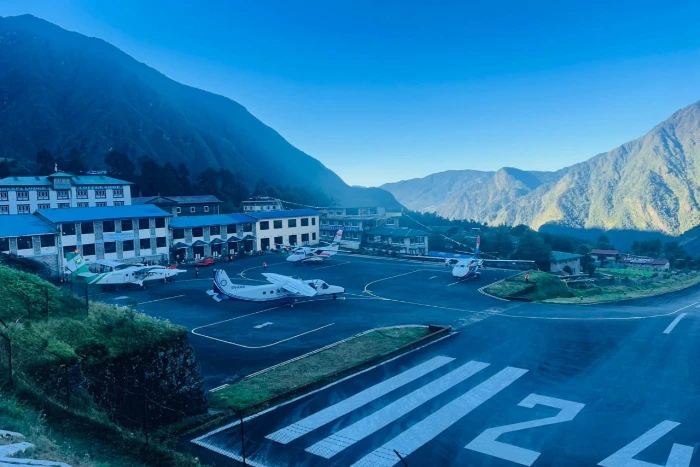
During peak trekking season, currently mid-March to mid-May and late September through November, all Lukla flights are diverted from Kathmandu's Tribhuvan International Airport to Manthali Airport in Ramechhap, roughly four to five hours' drive from Kathmandu, with departures typically requiring a very early start, often a 1am or 2am pickup. This shift was introduced by Nepal's Civil Aviation Authority to reduce congestion and improve reliability during the airport's busiest weeks, and while it adds a genuinely long, tiring start to your trek, flights from Ramechhap are, in practice, more reliable than the old Kathmandu departures were during the same peak weeks.
Outside peak season, flights typically operate directly from Kathmandu with a much shorter, more convenient departure. If your 2027 dates fall right at the edge of peak season, this is worth factoring into how you plan your first and last days in Kathmandu, since it affects hotel bookings, transfer timing, and how much buffer you should build in either side of the flight.
Nepal Vision Treks builds a buffer night into Everest-region itineraries specifically to absorb flight delays without derailing the rest of the trek, and this is worth asking any operator about directly if it's not already stated clearly in the itinerary you're sent.
How Far Ahead Should You Actually Book?
This is where a safety-focused, smaller-group operator changes the maths compared to a mass-market one.
Large-volume operators can often accommodate late bookings because they run bigger groups and simply add another trekker to an existing departure. Operators who cap group size to maintain a genuine guide-to-trekker ratio, proper porter load limits, and the kind of individual attention that matters if something goes wrong at altitude, don't have that flexibility. A capped departure fills up and stays full.
For peak season dates (October to November, March to April) on popular routes like Everest Base Camp or Annapurna Base Camp, six months' advance booking is a reasonable minimum, and eight to twelve months gives meaningfully more choice over exact dates and, where relevant, a private rather than shared departure. For restricted areas like Manaslu, where group formation and permit processing both take longer, the same eight-to-twelve-month window applies even outside the absolute peak weeks. For shoulder-season dates or less popular routes, three to six months ahead is usually sufficient, though international flight prices tend to be more favourable the earlier you book those regardless of trek availability.
Booking early also matters more, not less, the further out you're planning, for a reason that has nothing to do with availability. A longer lead time gives you more room to train properly, sort travel insurance that genuinely covers high-altitude trekking and helicopter evacuation, and build in contingency around work or family commitments, all of which matter more when the trip itself, by design, doesn't offer much flexibility once you're on the trail.
A Simple 2027 Planning Timeline
12 months out: Decide on region and rough dates. If a restricted area like Manaslu or a peak climb is part of the plan, start the conversation with your operator now.
8 to 10 months out: Book your trek with a deposit, particularly for peak-season autumn or spring dates. Begin researching and purchasing travel and rescue insurance with genuine high-altitude and helicopter evacuation coverage.
6 months out: Book international flights. Start a structured fitness programme if you haven't already, particularly for anything graded Hard or involving a pass above 5,000m.
2 to 3 months out: Confirm final trek details, gear list, and any pre-trek briefing your operator offers. Sort out visa requirements and any vaccinations recommended for your specific itinerary.
2 to 4 weeks out: Final gear check, final fitness push, and, if flying into peak-season Lukla via Ramechhap, mentally prepare for an early departure on day one.
Ready to start planning your 2027 trek? Get in touch with Nepal Vision Treks to lock in dates for Everest Base Camp, the Annapurna Circuit, the Manaslu Circuit, or a peak climb, with a small-group, safety-first operator that plans your trip around your dates, not the other way round. Reach out to us at +977 9802342081 or [email protected]
Frequently Asked Questions