Nepal vision | 27/04/2026
When we think of Nepal, we picture snow-capped Himalayas, incense-filled temple squares, and the exhilarating highs and lows of the trails. What may come as a surprise to many queer travelers is that the South Asian landlocked country also boasts one of the continent's most progressive LGBTQ+ legal regimes, and a tradition of curious and welcoming hospitality to visitors of all orientations.
But Nepal is not Bangkok or Berlin. It is a place where the old and new reach a tenuous compromise, where laws accelerate far in advance of social acceptance, and where the experience of a queer tourist may change from one part of the city of Kathmandu to a village in the Khumbu. In this guide, we aim to provide you with the whole truth so you can prepare for a safe and enriching travel experience.
Is Nepal Gay-Friendly? The Short Answer
Yes, and it's consistently Asia's safest destination for LGBTQ+ travellers. The 2023 LGBTQ+ Travel Safety Index ranked Nepal 44th out of 203 countries, the best of all Asian nations, ahead of Taiwan (48th), India (51st), and Thailand (62nd).
The rundown: Nepal is safe, socially conservative, but accepting and much more progressive in the cities than in the countryside. Homosexuality is not illegal in Nepal. It has not been colonised and so has not inherited the Section 377 law that existed in India until 2018. Violent homophobia among Western tourists is nearly unheard of. You are much more likely to encounter polite curiosity than violent homophobia.
However, social acceptance is not completely equal and may be more complicated for trans and visible queer travellers in more traditional communities. Be sure to read this guide before you travel.
LGBTQ+ Rights in Nepal: Legal vs. Social
The legal progress in Nepal is certainly extraordinary for the region, and has been driven almost exclusively by the judiciary.
- 2007: The Supreme Court Revolution Activist Sunil Babu Pant's petition led to the Supreme Court ruling that the government must remove discriminatory laws, establish a committee to examine recognition for same-sex relationships, and recognise a third gender category. This was the world's first court ruling to cite the Yogyakarta Principles, a new international human rights law, to support LGBTQ+ rights.
- 2008: First Openly Gay Federal Politician in Asia Nepal elected the first openly gay federal politician in Asia, Sunil Babu Pant, to the Constituent Assembly.
- 2015: Constitutional Protection The new republican constitution of Nepal also explicitly protected against discrimination on the basis of sexual and gender minorities, ensuring LGBTQ+ citizens' right to access all state mechanisms and public services.
- 2023-2024: Short-term Registration of Same-sex Marriage. In June 2023, a Supreme Court judge issued a temporary order to local governments to register same-sex marriages. In April 2024, the Ministry of Home Affairs issued a circular to all local offices to implement this. By 2026, local LGBTQ+ groups have reported approximately 35 same-sex marriages, nine of which were reported by local media.
Between the Law and Life
Here, we have to be honest. The "temporary" marriage certificates only allow same-sex couples to own property, access tax benefits, make medical decisions for their partner, or adopt a child. District offices continue to use gendered forms with roles of "bride" and "groom". Marriages have been refused at some district offices, and the Supreme Court's final decision on the matter postponed multiple times due to a lack of constitutional judges, had not been issued as of April 2026.
What It's Like to Be a Queer Foreign Traveler in Nepal
For queer international visitors, it's not always so simple to evaluate whether a destination is "safe" or "unsafe" when travelling in Nepal. Nepal is a place where old practices, ingrained social norms, and progressive legal changes co-exist in a way that is at once familiar and new. Legally, Nepal is one of the most progressive countries in South Asia in terms of recognising gender diversity and increasing LGBTQ+ representation. But in practice, it can be a mixed bag depending on location, presentation, and disclosure.
Urban vs. Rural Experience
Kathmandu has its own social dialect. The capital has a young and vocal activist community, annual pride festivals, gay-owned businesses, and a tourism sector that has trained itself to be more inclusive. The country's second-largest tourist destination, Pokhara, has a similar lakeside feel.
Once you leave the main valleys, it is different. The villages along the Everest Base Camp Trek or Annapurna Circuit are very touristy guides and teahouse owners are familiar with same-sex couples. But openly talking about queerness is not common. You will not find intolerance, but you will find differences. This is not hostile; it is a new environment for both parties to explore.
Public Behaviour and Social Norms
Public affection is not common for anyone in Nepal, queer or not. It's uncommon for heterosexual Nepalis to hold hands or to kiss in public. For LGBT visitors, this means that the threshold for "discreet" is low, and a same-sex couple being in public will not stand out. Modest holding hands is unlikely to cause offence; anything more should be kept private.
Be covered up, especially in rural areas and around temples. Wearing clothes that cover your shoulders and knees will demonstrate your respect for the local culture and show that you are a considerate visitor, which opens more doors.
Visibility and Safety
One queer tourist who has visited Nepal for three weeks, describing herself as androgynous, masc-presenting, almost six feet tall, and with very short hair, has reported that, for her entire visit, in Kathmandu and in mountain villages, she never felt unsafe or uneasy about her sexuality. The only instance in which her sexuality was discussed was when her trekking guide asked polite questions in a respectful manner.
This is typical of queer international visitors. Cisgendered visitors will have similar experiences to other tourists in Nepal. Gender-nonconforming and visibly trans visitors will be looked at more and may want to travel with a friend or a recommended guide in busy and rural areas.
Safe Cities and Spaces in Nepal
Nepal doesn't yet have the same highly visible queer neighbourhoods found in Western cities, but there are certain cities and locations where queer people can feel safer, welcome and relaxed.
Kathmandu
The capital, Kathmandu, is Nepal's queer city. Most gay-friendly venues are clustered in Thamel, the city's tourist hub, including the first and most popular gay bar in Nepal, Pink Tiffany, which opened in 2015 by transgender model Meghna Lama.
It is still the epicentre of the LGBTQ+ nightlife in the capital. Thamel's Fire Club is also home to a popular LGBTQ+ night on Fridays.
Thamel also has some Travel Proud hotels, meaning their staff are LGBTQ+-trained. International chains (Hyatt, Marriott, Crowne Plaza) are present in Kathmandu and are safe.
Kathmandu has a lot to see by walking and talking. On Saturdays, former parliamentarian Sunil Babu Pant leads a heritage walk through the old city, explaining the matriarchal shrines of the Kathmandu Valley.
Ancient Hindu temples are adorned with homoerotic imagery, hermaphroditic deities, and representations of gender fluidity that existed long before the modern idea of queerness and demonstrate that Nepal has a long history of gender non-conformity.
Pokhara
Nepal's second-largest city, Pokhara, lies alongside the shimmering stillness of Phewa Lake and is framed by the magnificent backdrop of the Annapurna massif. Pokhara is a more cosmopolitan city than Kathmandu, with a growing number of LGBTQ+-friendly guesthouses and is also one of the most accepting cities in Nepal for queer visitors. It is also the gateway to the treks of the Annapurna region.
Trekking Regions
On the popular trekking routes, Everest Base Camp, Annapurna Circuit, and Langtang Valley, teahouse owners and guides are well versed in interacting with foreign tourists. There's little to no discrimination here against tourists. The further from the beaten track you travel, the more traditional the social milieu, but even in remote villages, Nepal's longstanding tradition of hospitality (Atithi Devo Bhava, "Guests are like gods") means that you're likely to find acceptance.

LGBTQ+ Friendly Spaces, Organisations, and Events
Nepal’s queer scene may not be highly visible, but it is steadily growing through community-led spaces, supportive organizations, and vibrant events.
Blue Diamond Society
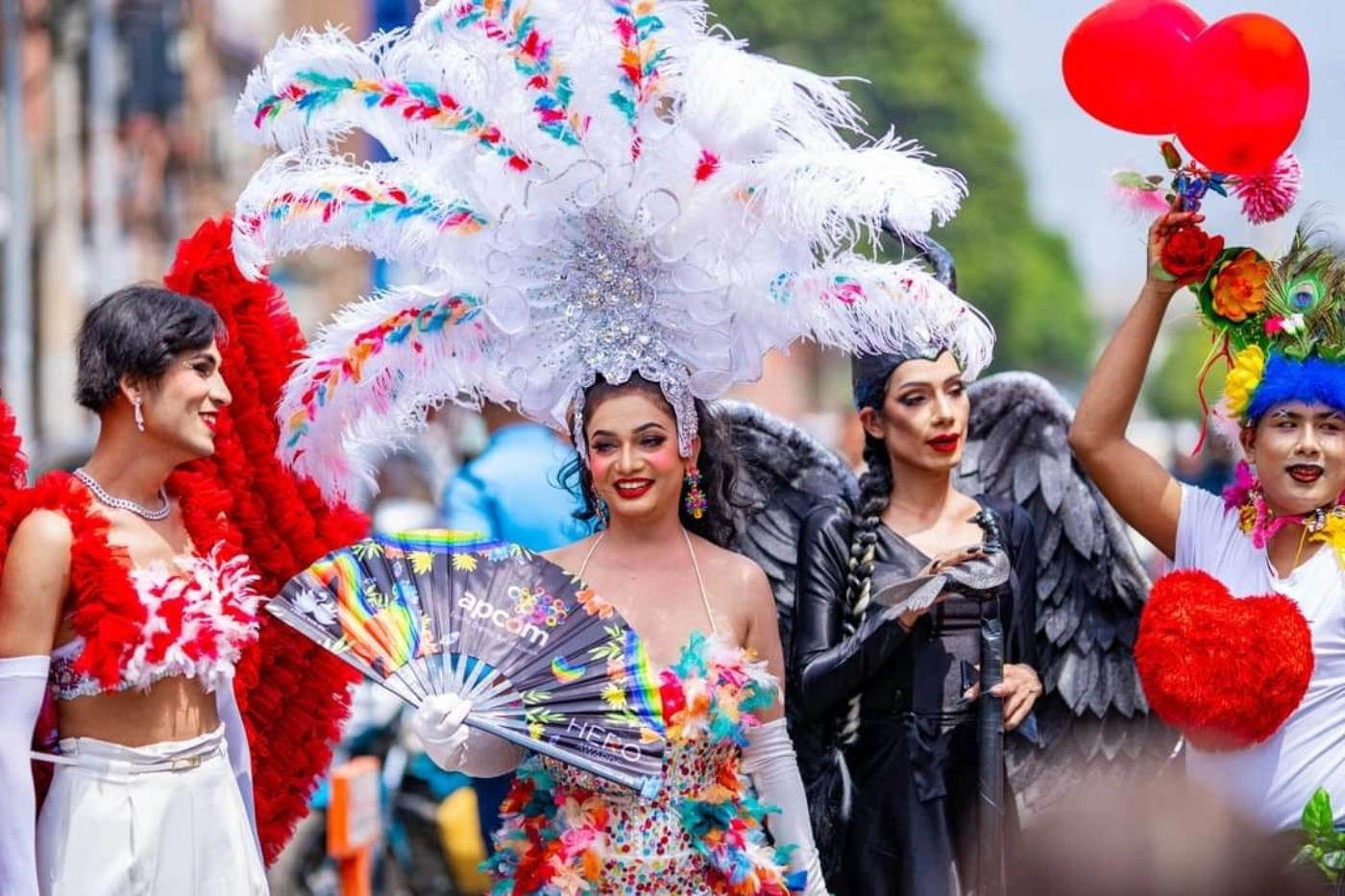
The Blue Diamond Society is Nepal's largest LGBTQ+ advocacy group, established in 2001. It offers legal, health, and social support to queer Nepalis and has been a key player in every successful legal case since 2007. Visitors can contact the Society for the latest news, events and networking opportunities, as well as advice on safe spaces. Their Pride celebrations, held in August or September (to overlap with Gai Jatra), are one of the most beautiful and significant queer events in Kathmandu.
Nepal Vision Trek
For LGBTQ+ trekkers who are more interested in getting into the mountains, Nepal Vision Trek is a Kathmandu-based trekking company that has organised treks for LGBTQ+ people in both group and private settings.
Whether you're embarking on an Everest Base Camp trek, an Annapurna Circuit journey, or a more modest highland trek, your trek will be planned with the attention to detail that means everything from permits to guide allocation and accommodation will be professional and stress-free. Working with an LGBTQ+ friendly company means you can enjoy the trail (and the view).
LGBTQ+ Friendly Cafes and Restaurants
Cafe Mitra and Inclusive Galaxy in Kathmandu are explicitly LGBTQ+ friendly. Other cafes and restaurants in Thamel are well-known for hosting a multicultural, international clientele and are implicitly safe and welcoming.
Pride Events
Nepal's key LGBTQ+ Pride festivals:
- Nepal Queer MOGAI Pride Parade is held every June in Kathmandu, organised by Queer Youth Group.
- Blue Diamond Society Pride is held in August or September in Kathmandu, as part of the Gai Jatra festival, a celebration with a focus on equal rights.
- Gai Jatra, another traditional annual festival in which people celebrate their deceased relatives from the previous year, is also a day of cross-dressing and gender-play that pre-dates modern activism, and places LGBTQ+ visibility in a traditional cultural context.
Social Context: Queerness in Nepal
To understand why Nepal is in its unique position (conservative and progressive) we must examine its cultural and religious background.
Gender Fluidity in Hindu Mythology
There are myriad representations of gender fluidity and queerness in Nepal's dominant Hindu tradition. The god Ardhanarishvara is literally a half-male, half-female form, the combination of Shiva and Parvati. Avalokitesvara, an important Bodhisattva in Nepali Buddhism, is represented in both gender-ambiguous and explicitly female forms. Antique carvings in the Kathmandu Valley temples depict homosexual and hermaphroditic figures that have never been deemed offensive by cultural authorities.
This phenomenon presents an interesting conundrum: Hindu mythology accommodates gender complexity that Hindu society does not. It accounts for why conservative Nepalis are not often violent homophobes (queerness has mythical precedent), and that gay Nepalis often feel pressure to marry women (family and community expectations are not governed by mythology).
Festivals and Gender Performance
The most obvious manifestation of this is Gai Jatra. In this week-long festival, families who have experienced the loss of a loved one in the previous year parade a family member (usually a man) dressed as a cow or a woman.
Satire, humour and gender performance are also central to the festival, which is a way of coping with grief and loss. The Blue Diamond Society has intentionally centred the August/September Nepal Pride on tradition, bringing queer visibility to one of the oldest festivals in the Kathmandu Valley.
Modern Queer Identity in Nepal
There is a huge generational gap in Nepal. Young urbanites, especially those in Kathmandu and university graduates, are more likely to be informed and supportive of LGBTQ+ rights. The "activist class" who have brought about legal reform are predominantly young Nepalis in their 20s and 30s.
Older Nepalis (and rural Nepalis more broadly) may view homosexuality through the prism of family and social expectations, rather than legal rights. Queer Nepalis often lead double lives - this is not out of denial but because of the need to navigate family and community dynamics that have important financial and social implications.
Traveler Tips for LGBTQ+ Visitors
- Hotels for couples: Big chain hotels in Kathmandu and Pokhara will definitely accommodate a same-sex couple in a double bed. In smaller guesthouses, it may take time for the staff to understand - simply ask for a double bed (or specify "we want a room with a double bed, please"). It's a good idea to read the most recent reviews from LGBTQ+ guests on booking sites.
- Dating apps: Grindr, Scruff and other apps work in Nepal and are popular both for locals and visitors in cities. Do what you would in any city, initial meetings in public spaces, caution and awareness that some locals may be taking considerable risks that foreign visitors don't.
- Small talk: If asked whether you are brothers or sisters, "no, we're partners" will be acceptable in most urban areas. In more rural or conservative areas, "travel companions" is a harmless alternative. Nepalis will be interested, but not hostile.
- Emergency contacts: The Blue Diamond Society (+977-1-4278665) is the go-to emergency contact for LGBTQ+ travellers in need of assistance. The Nepal Tourism Board's tourist support number is also a resource. Be prepared with the details of your embassy.
- Tourist arrival card: Only three options for gender exist in Nepal. The arrival card at Tribhuvan International Airport has a gender option of "other" - a small yet significant gesture of inclusion.
Do's and Don'ts for Queer Travelers in Nepal
Do:
- Look up your particular accommodation and tour operator. Nepal Vision Trek is a good place to start looking for queer-friendly trekkers.
- Reach out to Queermandu or the Blue Diamond Society to connect with local LGBTQIA+.
- Go to a Pride event, Kathmandu Pride in June or the Blue Diamond Society's event in August/September.
- Cover up around temples and away from the city.
- Memorizing some Nepali words - "Namaste" (hello) and "Dhanyabad" (thank you) are essential.
- Patronize LGBTQ+ businesses; they are economic interests in a progressive Nepal.
Don't:
- Show public affection in excess of what Nepali heterosexual couples would do (very little).
- Disclose your identity in unknown or isolated settings without reading the room first.
- Assume that legal protections translate automatically to social acceptance; they are steps in a longer journey.
- Forget that for local queer Nepalis, the stakes of visibility are significantly higher than for foreign visitors. Be a respectful, not an oblivious, guest
Who Should Go to Nepal as a Queer Traveler?
Nepal is ideal for:
- Thrill-seekers looking for a great trekking destination in a culturally fascinating setting.
- Culturally curious people who want to visit a country and community at an interesting historical moment.
- LGBTQ+ adventurers who are interested in learning about different cultures.
- People who want to invest their tourist dollars in a social cause, Nepal's LGBTQ+ businesses are real, small and important.
Consider carefully if:
- You are looking for or need the full social acceptance of Amsterdam, Barcelona or the tourist areas of Bangkok. Nepal is not there yet.
- You are a first-time queer solo traveler with a low tolerance for uncertainty. Nepal is best approached with experience and flexibility.
- You are trans or very gender-nonconforming and travelling alone to remote destinations. This is not to say you cannot go, but please be more prepared, hire a trusted local guide and get in touch with the Blue Diamond Society prior to travel.
To wrap up, the honest answer for queer travel in Nepal is yes with eyes open.
The LGBTQ+ progress in Nepal is not over. The Supreme Court's final ruling on marriage equality is yet to come. The new prime minister has already been called out for homophobic statements. Queer Nepalis still face pressure in the community. There is a discrepancy between the letter of the law and lived realities.
The mountains don't judge your identity or your sexuality. The prayer flags over the passes flutter in the wind that has blown this way for time immemorial. And in the back alleys of Kathmandu, young queer Nepalis are creating businesses, events, laws, and a community that is worth seeing and celebrating.
Travel with awareness. Travel with respect. Travel anyway.
Ready to explore Nepal your way?
Travel with Nepal Vision Treks for a safe, respectful, and unforgettable journey designed for every kind of traveler.
FAQs