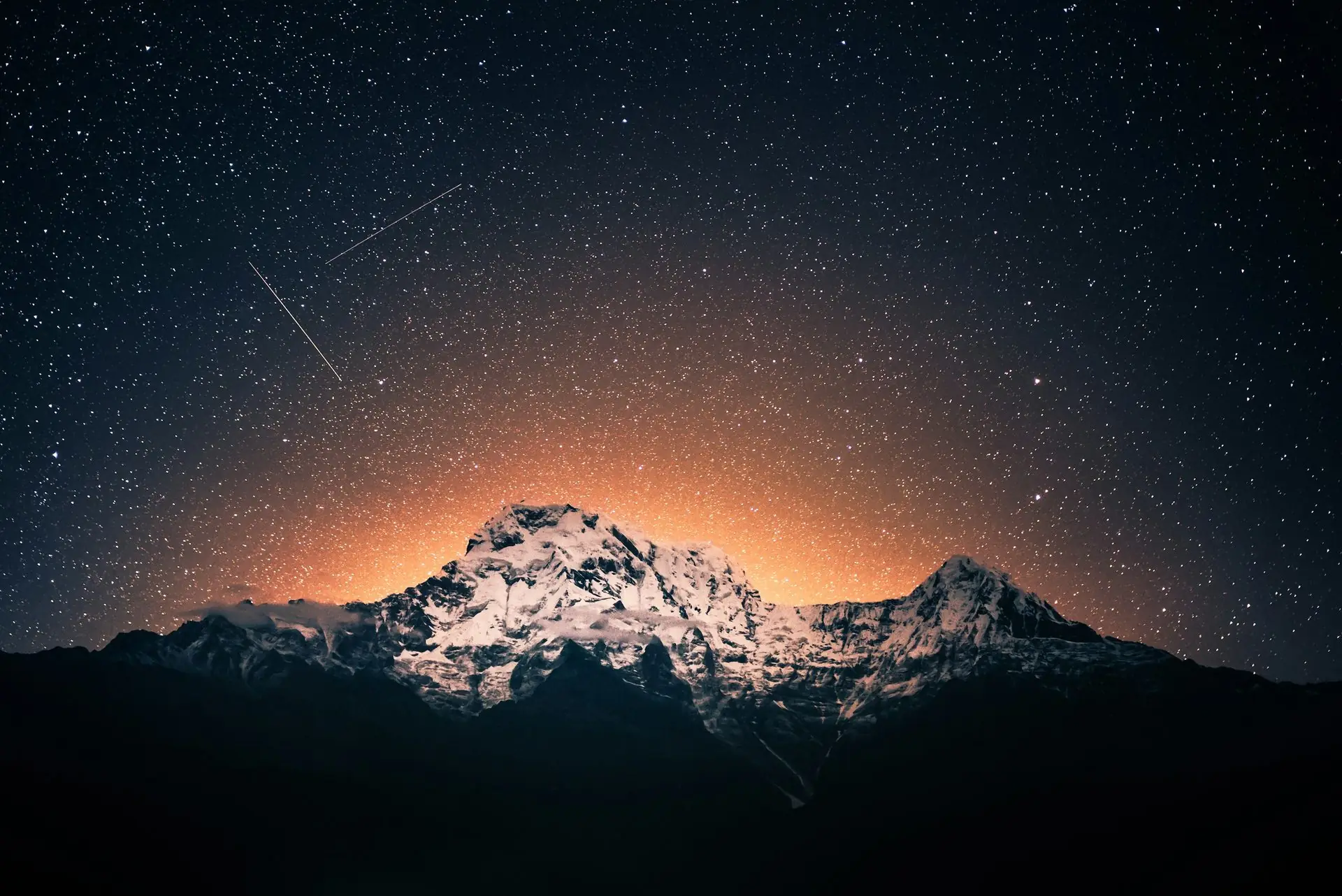
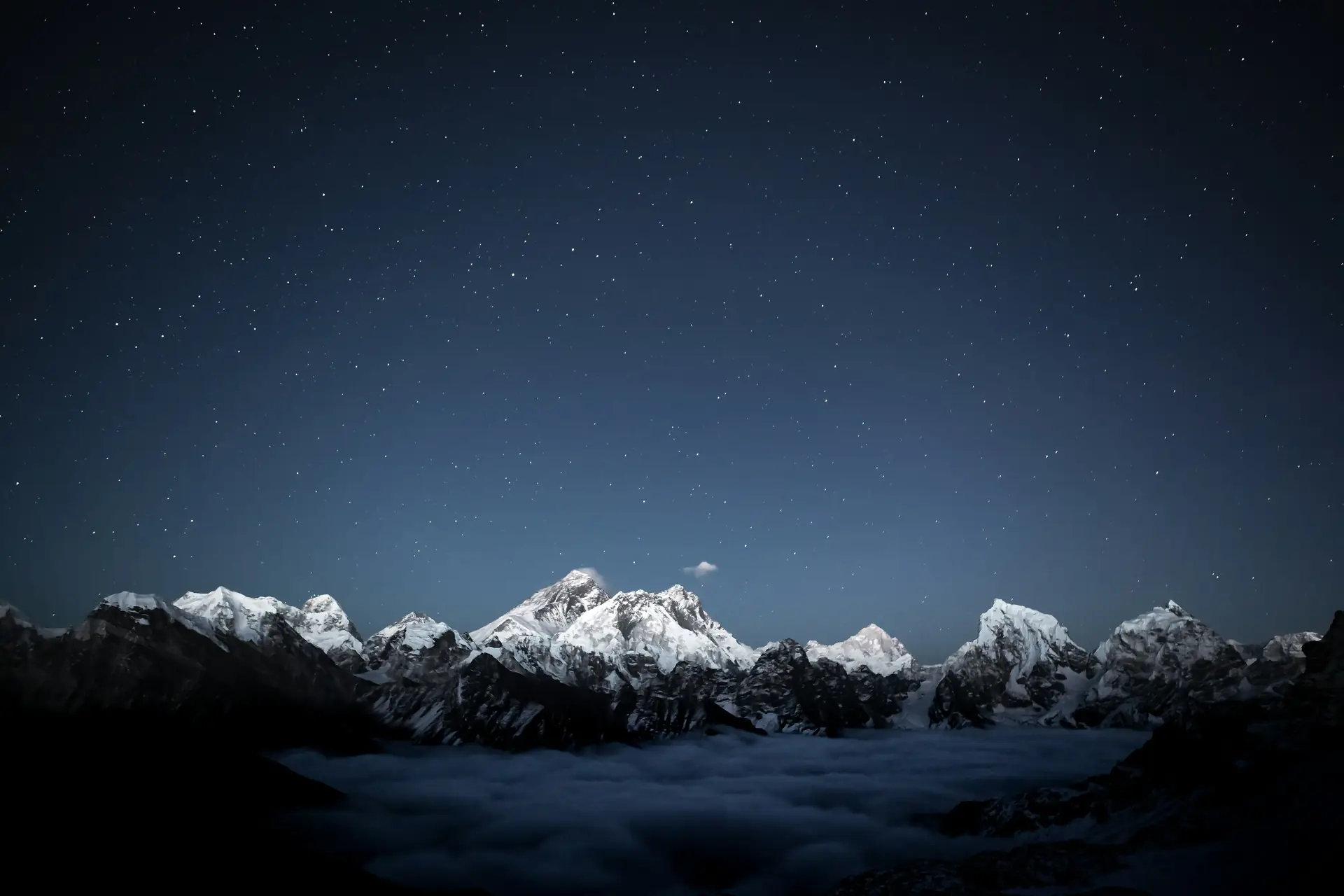
Everest 3 Passes Trek: Renjo La, Cho La & Kongma La

Everest 3 Passes Trek: Renjo La, Cho La & Kongma La

21Days
5,535mMax altitude
HardDifficulty
$2,390per person

Overview

Everest 3 Passes Trek: Renjo La, Cho La & Kongma La

The Everest Three Passes Trek is the version of this region built for people who've already done, or don't want to just do, the standard walk to Everest Base Camp. Over 21 days, it links four major Khumbu valleys, Imja Khola, Khumbu, Gokyo and Bhote Koshi, by crossing three of the highest trekking passes in the world: Renjo La at 5,360 metres, Cho La at 5,420 metres, and Kongma La at 5,535 metres. Along the way, it takes in everything the classic routes offer separately, the turquoise Gokyo Lakes, Everest Base Camp itself, and the sunrise viewpoint circuit around Namche and Tengboche, and connects them into one continuous high-altitude loop rather than an out-and-back walk.

This is a genuinely demanding trek, and it's worth being upfront about that rather than softening it. Each pass sits above 5,300 metres, involves early starts in the dark and cold, and Cho La in particular requires a short glacier traverse where microspikes or crampons are commonly needed depending on snow conditions. None of the three passes demands technical climbing skill, no ropes, no harnesses, but sustained high-altitude endurance and comfort on exposed, sometimes icy ground matter more here than on almost any other teahouse trek in Nepal.

Why This Route Beats a Standard Everest Base Camp Trek

If you've already read about Everest Base Camp or seen photos of Kala Patthar, the honest pitch for this trek is that EBC is an in-and-out walk up one valley, while this is a full circuit through four. You get the Gokyo Lakes and Ngozumpa Glacier, Nepal's longest glacier, which most EBC-only trekkers never see, you get Everest Base Camp itself and the Khumbu Icefall view, and you get Chhukung valley and the Imja Khola side, which the standard route also skips entirely. Kongma La alone rewards you with a close-up view of Lhotse's ice-clad flank that's genuinely different from anything visible on the main trail.

This is also a real test of a guide's route knowledge, since weather windows on each pass close fast and the crossing order matters. We build in the acclimatisation and buffer days this route needs rather than compressing them to shorten the itinerary on paper.

Best Time for the Everest Three Passes Trek

Spring, March to May, and autumn, September to November, are both strong windows, and the choice between them matters more here than on gentler treks because pass conditions shift with season. Autumn generally offers the most stable weather for all three crossings, with the clearest post-monsoon air. Spring brings warmer daytime temperatures on the lower approach but can carry more residual snow on Cho La, which sometimes means a longer, slower crossing. Winter is possible for well-prepared, experienced cold-weather trekkers, though pass conditions become genuinely serious and closures are more common. Monsoon summer isn't recommended, since cloud cover removes the views this trek is built around and trail conditions on the lower approach deteriorate.

Itinerary Outline:

1st Day: Arrival day in Kathmandu (1,300m/4,264 ft)
2nd Day: Kathmandu Valley sightseeing & preparation for the trek (1,300m/4,264 ft)
3rd Day: Fly to Lukla (2,800m/9,186ft) & trek to Phakding (2,652m/8,700ft), a 3-4 hrs walk
4th Day: Trek from Phakding to Namche Bazaar (3,440m/11,283ft), a 5-6 hrs walk
5th Day: Acclimatisation day at Namche Bazaar
6th Day: Trek to Thame (3800m), 3 to 4 hours
7th Day: Trek to Lungdeng (4380m), 3 to 4 hours
8th Day: Trek to Renjo- La (17,580ft / 5360m) to Gokyo Lake (4800m)
9th Day: Acclimatisation day around Gokyo Lake
10th Day: Trekking to Gokyo RI (5,330m/17,483ft), and trek to Thaknak (4750m/15580ft), 6-7 hrs walk
11th Day: Trek to Cho-la Pass (5420m/17,777ft) to Dzongla (4,850m/15908ft), a 7-8 hrs walk
12th Day: Trek To Lobuche
13th Day: Trek to Gorakshep (5,160m/16,929ft), 5-6 hrs walk
14th Day: Trek to Everest Base Camp (5,364m/17,593ft) and return to Lobuche overnight. 6 to 7 hrs
15th Day: Trek from Lobuche - Kongma La (5,535m/18,159ft) - Chhukung (4,730m/15,518ft): 6-7 hrs
16th Day: Trek to Thangboche (3,867m/12684ft), 4-5 hrs walk
17th Day: Trek to Monjo ((2680M/8791ft), 5-6 hrs walk
18th Day: Trek to Lukla (2,800m/9,186ft), 6-7 hrs walk
19th Day: Fly back to Kathmandu (1,300m/4,264 ft)
20th Day: Leisure day in Kathmandu
21st Day: Departure from Kathmandu
End of our services

Note: Because of bad weather, we could face the problem of domestic flights to/from Lukla being delayed by a few hours or cancelled for a day or more. Very rarely, but it could happen even in the best trekking season also as you know how climate changes affect our world. Thus, we always recommend you add a supplement night/s in Kathmandu after your trek if possible (just in case). If everything runs smoothly, you can enjoy other activities like sightseeing, white-water rafting, wildlife activities, and shopping, as you wish on that additional day. However, if you want to help rescue in the state of flight cancellation to/from Lukla, we can organise it as per your request with extra cost.

Duration21 days
DifficultyHard
Max altitude5,535m
Start / EndKathmandu
AccommodationHotel & Teahouse
Everest 3 Passes Trek: Renjo La, Cho La & Kongma La photo
  • Panoramic view of mountan
  • Sherpa culture
  • Sunrise/Sunset view from Kalapathhar
  • Sunrise/Sunset view from Gokyo Ri
  • Gokyo Lake
  • Tyangboche Monastery
  • Monastery
  • Rhododendron forest
Everest 3 Passes Trek: Renjo La, Cho La & Kongma La photo Everest 3 Passes Trek: Renjo La, Cho La & Kongma La photo Everest 3 Passes Trek: Renjo La, Cho La & Kongma La photo Everest 3 Passes Trek: Renjo La, Cho La & Kongma La photo

Best Season for this trip

Mar to May & Sep to Dec

Spring: Mar-May Monsoon: Jun-Aug Autumn: Sep-Nov Winter: Dec-Feb

Day by day

Unfold your journey

Everest Three Passes Route Map

Kathmandu → Kathmandu

Map Image of 3 passes
day
1

Arrival day in Kathmandu (1,300m/4,264 ft)

20 Minutes Hotel Kathmandu Welcome Dinner
Our representative meets you at Tribhuvan International Airport and transfers you to your hotel. A welcome dinner that evening covers the trip briefing and gear check.
day
2

Kathmandu Valley sightseeing & preparation day for the trek (1,300m/4,264 ft)

Hotel Kathmandu Breakfast
A guided day around Boudhanath, one of the largest stupas in the world, Pashupatinath, the principal Hindu pilgrimage site on the Bagmati river, Swayambhunath on its hilltop, and Kathmandu Durbar Square, home to the living goddess Kumari. The evening includes a final gear check and crew introduction.
day
3

Fly to Lukla (2,800m/9,186ft) & trek to Phakding (2,652m/8,700ft), a 3-4 hrs walk

20 Minutes 27 Minutes 3-4 Hrs Tea House Phakding 3 Meals
The short mountain flight into Lukla's sloped runway is one of the more memorable starts to any Everest region trek. From Lukla, a gentle, mostly downhill walk follows the Dudh Koshi through Sherpa villages to Phakding, kept deliberately short as your first day at altitude.
day
4

Trek from Phakding to Namche Bazaar (3,440m/11,283ft), 6-7 hrs walk

6-7 Hrs Tea House Namche Bazaar 3 Meals
The trail follows the Dudh Koshi upstream, crossing it twice on suspension bridges before entering Sagarmatha National Park at Monjo, where your permits are checked. Beyond Jorsalle, the last village before Namche, the route crosses the high Hillary suspension bridge before a genuinely steep final climb to Namche Bazaar, the trading capital of the Khumbu.
day
5

Acclimatization day at Namche Bazaar

Tea House Namche Bazaar 3 Meals
A full rest day, ideally not spent lying in bed. A side hike to the Everest View Hotel gives an early, high vantage look at Everest itself, and Saturday mornings bring Namche's lively weekly market. The Sherpa Culture Museum is worth the hour for context before the higher, quieter valleys ahead.
day
6

Trek from Namche to Thame (3,800m)

3-4 Hrs Tea House Thame 3 Meals
Leaving the main Everest Base Camp trail here, the route heads west into the older, quieter Bhote Koshi valley. Thame is the ancestral Sherpa village along the historic trade route to Tibet, and its gompa, set on a ridge above the village, is one of the older monasteries in the Khumbu.
day
7

Trek from Thame to Lungden (4,380m)

4-5 Hrs Tea House Marlung 3 Meals
The trail continues north through scattered yak kharkas and a handful of small settlements, with the valley narrowing and the vegetation thinning noticeably. Lungdeng is a basic staging point with limited teahouse capacity, existing mainly to position trekkers for the Renjo La crossing ahead.
day
8

Cross Renjo La (5,360m) and Descend to Gokyo (4,800m)

3-4 Hrs Tea House Lungdeng 3 Meals
The first of the three passes, and for many trekkers the most rewarding, since the descent delivers your first view of the Gokyo Lakes spread out turquoise against the Ngozumpa Glacier below. The climb to the pass is steady rather than technical, but genuinely cold and exposed near the top, with prayer flags marking the summit and a wide panorama across to Everest, Lhotse and Makalu on a clear day.
day
9

Acclimatisation Day at Gokyo (4,800m)

6-7 Hrs Tea House Gokyo 3 Meals
A rest day at the lakeshore, with the option of a short walk along the fifth Gokyo Lake or simply resting after the pass crossing. The Ngozumpa Glacier, Nepal's largest, is visible directly from the village.
day
10

Climb Gokyo Ri (5,357m) and Trek to Thaknak (4,750m)

Tea House Gokyo 3 Meals
A pre-dawn climb to Gokyo Ri rewards you with one of the widest mountain panoramas in the entire Khumbu, Everest, Lhotse, Makalu and Cho Oyu all visible from one point. After descending back to Gokyo for breakfast, the trail continues to Thaknak, a small staging settlement ahead of the Cho La crossing.
day
11

Cross Cho La (5,420m) to Dzongla (4,850m)

7-8 Hrs Tea House Thaknak 3 Meals
The most technical day of the trek. The approach to Cho La is a steady, rocky climb, but the descent on the far side crosses a glacier that typically requires microspikes or crampons depending on recent snowfall, a genuinely different kind of terrain from the previous passes. Dzongla, a small cluster of teahouses with a clear view toward Cholatse and Ama Dablam, is your reward at the end of a long day.
day
12

Trek from Dzongla to Lobuche (4,940m)

5-6 Hrs Tea House Dzongla 3 Meals
A shorter, gentler day after yesterday's demanding Cho La crossing, following the trail down and around to rejoin the main Everest Base Camp route. Lobuche sits on the lateral moraine of the Khumbu Glacier, with Nuptse's south face rising directly across the valley, and functions as the last proper staging village before Gorakshep and Base Camp itself. You'll pass this way again briefly on day 14's return leg, so it's worth taking the shorter distance as a genuine rest rather than rushing ahead.
day
13

Trek from Lobuche to Gorakshep (5,160m)

5-6 Hrs Tea House Gorakshep 3 Meals
A short, straightforward day compared to what's come before, following the moraine trail along the Khumbu Glacier with Pumori dominating the skyline ahead. Given the shorter distance, most groups arrive at Gorakshep by early afternoon, which leaves time to settle in and rest before the following day's push to Base Camp. Gorakshep itself is a stark, windswept settlement built on a dried glacial lakebed, the last teahouse stop before Everest Base Camp.
day
14

Trek to Everest Base Camp (5,364m) and Return to Lobuche

6-7 Hrs Tea House Lobuche 3 Meals
The trail to Base Camp threads across the Khumbu Glacier's moraine, rocky and slow going rather than technical, with the Khumbu Icefall coming into view as you near the camp itself. After time at Base Camp, the same trail returns to Gorakshep before continuing down to Lobuche for the night.
day
15

Trek from Lobuche via Kongma La (5,535m) to Chhukung (4,730m)

6-7 Hrs Tea House Chhukung 3 Meals
The third and highest pass, and widely considered the hardest of the three. The route climbs from Lobuche across a section of the Khumbu Glacier's moraine before a steep, sustained ascent to the pass itself, marked by a cairn wrapped in prayer flags. The descent into the Imja Khola valley toward Chhukung is long but more straightforward underfoot than either previous pass.
day
16

Trek from Chhukung to Tengboche (3,867m)

4-5 Hrs Tea House Tyangboche 3 Meals
A long but genuinely easier day, descending steadily through Dingboche and Pangboche before climbing to Tengboche, home to the largest and most significant monastery in the Khumbu, with an amphitheatre of Everest, Lhotse, Nuptse and Ama Dablam visible from the courtyard on a clear afternoon.
day
17

Trek from Tengboche to Monjo (2,680m)

506 Hrs Tea House Monjo 3 Meals
Retracing the lower trail, through Phunki Thanga and Sanasa, then down through Namche Bazaar one last time before continuing to Monjo for the final night on the trail.
day
18

Trek from Monjo to Lukla (2,800m)

6-7 Hrs Tea House Lukla 3 Meals
A final trekking day back through familiar lower-valley villages, retracing the route from day 3 in reverse, with time in Lukla to relax and mark the end of the trekking portion.
day
19

Fly Back to Kathmandu (1,300m)

20 Minutes 27 Minutes Hotel Kathmandu Breakfast & Farewell Dinner
We will take an early morning flight to Kathmandu. Our guide will be helping you to transfer to your hotel. You will have time to relax after a long journey and take back your breath.
day
20

Leisure day in Kathmandu

Hotel Kathmandu Breakfast
A buffer day, useful given how often Lukla flights face weather delays, and a free day for Thamel shopping or last sightseeing if the schedule has held. A farewell dinner in the evening closes out the trip.
day
21

Final Departure from Kathmandu

20 Minutes Breakfast
You will be free for this any last-minute shopping for gifts for your friends and family depending on your flight schedule. We will help you transfer from Kathmandu international airport for your final departure to your onward destination. We wish you a wonderful Himalayan adventure with us!

What's covered

Inclusions & exclusions

Trip includes

  • All airport and hotel transportation by private vehicle in Kathmandu as per the itinerary suggested.
  • Deluxe twin-sharing accommodation in Kathmandu with breakfast
  • Farewell dinner in Kathmandu (Alcoholic beverages are excluded)
  • Kathmandu to Lukla to Kathmandu by flight
  • Full board meal (breakfast, lunch, dinner, tea & coffee) during the trek
  • Seasonal fruits during the trek are provided
  • Comfortable & clean accommodation on teahouse/lodge/tent during the trek
  • Government Registered Trek guide (English speaking, First Aid and eco trained), Sherpa porter (one porter for two trekkers)
  • All necessary paper works, Everest region entry fee, and permits & TIMS card
  • Down jacket, four seasonal sleeping bags, Nepal Vision Treks duffel bag, and trekking map (sleeping bag to be returned after trip completion)
  • First aid exclusive medical kit bag
  • All government and local taxes

Trip excludes

  • Visa fees (You can obtain a visa easily upon your arrival at Tribhuwan International Airport in Kathmandu so (bring accurate USD cash and two passport photographs)) International airfare to and from Kathmandu
  • Lunch and dinner except for welcome & fare well dinner (and also in the case of early return from the mountain than the scheduled plan)
  • Any extra night accommodation in Kathmandu because of early arrival, late departure, and early return from the mountain (due to any reason) than the scheduled itinerary plan
  • Travel and rescue insurance

Dates & Prices

Upcoming Departures

departure

status

from

10-30 October 2026

Guaranteed

6/6 seats remaining

$2,390

join us

25 Oct - 14 Nov 2026

Guaranteed

5/5 seats remaining

$2,390

join us

Dates don’t fit? Every trip also runs privately on the date of your choice. Book a private departure.

FAQ’s

What travelers often ask

How difficult is the Everest Three Passes Trek?
It's rated hard. The trek involves three passes above 5,300 metres, multiple consecutive days above 4,500 metres, and one technical glacier traverse on Cho La's descent, though no ropes or climbing skill are required.
How long does the Everest Three Passes Trek take?
This itinerary runs 21 days from Kathmandu back to Kathmandu, including 2 arrival and preparation days, the trekking and pass-crossing days, and a buffer day for Lukla flight delays.
What permits are needed for the Everest Three Passes Trek?
Two permits: the Sagarmatha National Park Permit and the Khumbu Pasang Lhamu Rural Municipality Permit, both around NPR 3,000 each. A TIMS card is not required, since it was replaced for this region in 2018.
Which is the highest pass on the Everest Three Passes Trek?
Kongma La, at 5,535 metres, is the highest of the three, followed by Cho La at 5,420 metres and Renjo La at 5,360 metres.
Do I need previous trekking experience for this route?
Previous high-altitude experience isn't mandatory, but it helps considerably. Strong general fitness, genuine preparation, and comfort with long, cold trekking days matter more than prior experience specifically.

Good to know

Useful information

Permits Required

The Khumbu region simplified its permit system some years back, and it's worth knowing this clearly since some agencies still quote outdated requirements. You need two permits, not three.

Sagarmatha National Park Permit

Checked at the park entrance near Monjo, this costs NPR 3,000 per person, roughly USD 23, and funds the conservation of the national park the entire trek passes through.

Khumbu Pasang Lhamu Rural Municipality Permit

This replaced the TIMS card for the Khumbu region in 2018, and is checked just outside Lukla. It also costs NPR 3,000 per person, following a fee increase from NPR 2,000 in September 2024.

A TIMS card is not required for this trek. If anyone quotes you one as a separate line item, it's an outdated or padded quote. The total permit cost runs around NPR 6,000, roughly USD 45, per person, which we include in your package price and handle the paperwork for directly.

Training and Preparation for 3 passes

Give yourself a genuine 12 weeks of preparation for this trek given its length and cumulative altitude gain.

Weeks 1 to 4: Aerobic Base

Cardio 4 times a week, hill walking, running or cycling, building toward sustained effort rather than short bursts.

Weeks 5 to 8: Load and Endurance

Loaded pack hikes, 7 to 9kg, extending toward 6 to 7 hour days, with stair or steep incline training for the sustained climbs to each pass.

Weeks 9 to 12: Altitude and Back-to-Back Days

Consecutive long training days on weekends, since this trek's middle section runs multiple demanding days without a genuine rest in between. Any pre-trip altitude exposure above 3,000 metres is genuinely useful conditioning.

What to Pack

Beyond standard teahouse trekking layers, this trek's pass crossings call for real cold and glacier-ready gear: microspikes or lightweight crampons for the Cho La descent, since conditions vary enough that carrying your own is safer than hoping the teahouse rental stock fits, trekking poles for the long descents off each pass, a headtorch for the pre-dawn starts on pass-crossing days, glacier glasses or high-UV sunglasses for the exposed snow sections, and a sleeping bag rated to at least minus 15 degrees Celsius for the coldest nights at Lobuche, Dzongla and Gorakshep.

Cost and What's Included

Our all-inclusive price starts from USD 2,390 per person. That covers all airport and hotel transfers in Kathmandu, deluxe twin-share accommodation with breakfast, a farewell dinner, round-trip Lukla flights, full board during the trek, a government-registered English-speaking guide with first aid and eco-training, Sherpa porter support at one porter for every two trekkers, both required permits, a down jacket and four-season sleeping bag, a duffel bag and trekking map, and a dedicated first aid kit.

Not included: your Nepal visa, international airfare, meals in Kathmandu outside the welcome and farewell dinners, any extra nights caused by early arrival, late departure or Lukla flight delays, and travel and rescue insurance, which is required but not sold directly by us. Given Lukla flight disruptions are common enough in this region to genuinely plan around, we recommend building at least one buffer day into your own schedule beyond day 20.

Everest Three Passes vs Standard Everest Base Camp Trek

The standard Everest Base Camp trek is an out-and-back walk up a single valley, typically 12 to 14 days, moderate to hard, and considerably more heavily trafficked, since it's the region's default itinerary. This trek instead loops through four valleys, adds three genuinely demanding pass crossings, and roughly doubles the trip length. If your time or fitness is limited, or this is your first Everest region trek, the standard route to Base Camp remains the right call. If you want a complete circuit, far fewer other trekkers on the trail beyond Namche, and views of Gokyo and Chhukung that the standard route never offers, this is the stronger choice.

More Adventures

You may also like

Contact Us

Nepal flag

Dabali Marga, Thamel

Phone: 977-1-4524762

Fax: 977-1-4523296

Whatsapp: +977 9802342081

[email protected] [email protected]
United States flag

Washington DC, USA

Phone: +1 202-368-6657

Parashu Nepal

[email protected]
Australia flag

Sydney, Australia

Whatsapp: +61 426 730 548

Ashim Wagle

[email protected]
Canada flag

Regina, Canada

Phone: +1 (306) 250-1246

Shraddha Gaire

[email protected]
China flag

Beijing, China

Phone: +86 198 5746 8386

Bhaba Shrestha

[email protected]
Tripadvisor The New York Times Expedia Condé Nast Traveler Lonely Planet Forbes Travel Guide