Nepal vision | 09/04/2026
As you hike through the beautiful Himalayan mountain ranges in Nepal, you get to see the beautiful mountains and the remote paths that hardly anyone in the world has ever traversed. However, there are real dangers posed by this natural beauty, and every trekker needs to know them and take them seriously.
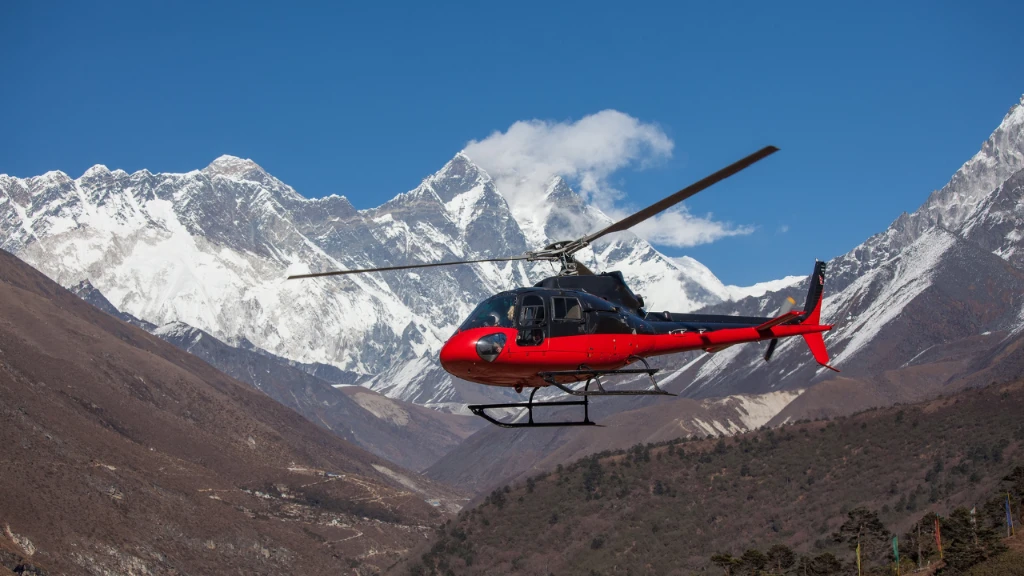
When a medical emergency is hundreds of meters above sea level, with no roads and few villages, a helicopter rescue may save lives. This is a great guide to everything you need to know about helicopter rescue in Nepal, including how the rescue mission works, what safety precautions to observe, and how to avoid unsafe scams that target unsuspecting trekkers.
Why Helicopter Rescue is Essential in Nepal
Understanding why helicopter rescue is important is the initial step towards recognizing its importance in the Nepalese mountainous areas. In remote Himalayan villages and at the highest elevations around the world, helicopter rescue is the only lifeline in the event of medical emergencies, where there are no roads or hospitals nearby.
In this section, we will discuss the geography that necessitates rescue, the kind of emergencies that arise, and the areas where the rescue is most frequently required.
Remote Terrain Challenges and Geography.
Nepal has a geography that is both its best asset and its biggest challenge for adventure seekers. The Himalayas offer some of the best trekking, visited by thousands of people annually, yet present significant logistical challenges that cannot be overlooked.
The majority of trekking trails lead to distant valleys with no road access, meaning that once on a trail, one is at the mercy of helicopter services in the event of severe circumstances.
Ground evacuation when a medical emergency occurs on high ground may take up to twelve or twenty-four hours or more, and that is time you just do not have when the life of somebody is at stake.
Common Emergency Situations
There are various reasons why helicopter rescue is vital in Nepal, and every responsible trekker must be aware of them before venturing into the mountains. Altitude sickness, in the most severe forms HAPE (High Altitude Pulmonary Edema) and HACE (High Altitude Cerebral Edema), may occur quickly and may be fatal in a few hours, and are among the common emergencies when the intervention of a helicopter is essential.
Fatalities caused by falls or accidents are also frequent emergencies in mountainous areas, and so are acute illnesses such as pneumonia, appendicitis, or other medical crises that would have been easily treated at sea level but would prove fatal at elevation.
Strokes and cardiac events do happen in the mountains, and the only hope of survival is an evacuation by helicopter.
High-Risk Regions in Nepal
The Everest, Annapurna, Langtang, and Manaslu areas are the high-risk areas where helicopter rescues are most common. These locations account for a large share of rescue operations in Nepal.
These areas have the greatest elevation gain, the most extreme weather patterns, and the worst road access, making any form of ground transportation difficult. Even a mild form of altitude sickness can worsen to become life-threatening at elevations above 5000 m.
The lack of helicopter rescue in these areas would leave most trekkers in situations they cannot escape from.
How Helicopter Rescue Works in Nepal (Step-by-Step Process)
All rescue missions in Nepal follow a set of steps that include coordinating your guide, trekking agency, insurance company, aviation authorities, helicopter crews, and hospital staff.
This knowledge will equip you to know what to expect and how to respond appropriately should an emergency arise. The seven steps listed below are the exact steps for the rescue process after a medical emergency is identified, from the time you arrive at a hospital until you receive adequate medical attention.
Step 1: Emergency Identification and Assessment
The initial step in any rescue mission is to help a person identify severe symptoms that require urgent medical care. Your trip guide or trek leader is the first responder, and he must correctly recognize the red flags that indicate a life-threatening situation.
Severe headache and shortness of breath, confusion, lack of coordination, or inability to walk are clear indications that something serious is occurring. Such an evaluation is crucial since not all headaches require evacuation. The headaches and nausea are mild, and many trekkers complain of them, particularly in the initial days at altitude. Usually, rest, hydration, and descent help alleviate them. The experience and judgment of your guide are vital at this stage, as he or she must know the difference between normal altitude changes and medical emergencies.
Step 2: Initiation of Rescue Requests.
When a serious condition is identified and evaluated, communication should be established to begin rescue efforts. This is normally done by your trekking agency, by your guide, who gets in touch via satellite phone or radio, or by simply contacting your insurance company via whatever communication means are available.
This is why it is of utmost importance to save your insurance company's emergency number in your phone and write it down separately. The majority of well-established trekking agencies have satellite communication devices that are used to get in touch in case of an emergency.
The guide will indicate where you are, the patient's symptoms, and the level of urgency of the need for assistance. This dialogue moves the whole rescue mission forward.
Step 3: Location Check and Communication.
The rescue coordinator should be aware of your location as accurately as possible. Here, GPS coordinates are crucial; if they are not accessible, the closest recognizable village name is very important.
In Nepal, the most common pickup zones are Lukla, Namche Bazaar, and Gorakshep, which are familiar to rescue coordinators and helicopter pilots. Being able to communicate your exact location clearly and precisely can save 30 minutes or even an hour of response time, which can be crucial in a life-or-death situation. Should the patient's whereabouts be in doubt, the helicopter crew might not be able to locate you, or rescue may be delayed for a long time.
Step 4: Coordination and Flight clearance.
Numerous bureaucratic and safety procedures must be completed before any helicopter can actually leave. The rescue should be approved by your insurance company to ensure that evacuation is provided in your policy. The flight should be cleared by the aviation authority based on legal and safety grounds. Weather conditions in the area should be evaluated to determine whether flying is safe.
This is usually done in 15 to 30 minutes and may seem frustratingly slow when one is ill, but these measures are required by law and for safety considerations. The helicopter crew must be allowed to fly, the insurance company must be informed that this is a valid emergency, and weather evaluation does not allow flights made into hazardous areas without need.
Step 5: Helicopter Dispatch
After all the clearances have been made, the helicopter takes off from its base, usually Kathmandu or Lukla, where the patient is.
The time taken to respond varies greatly, but is usually 30 minutes to 1.5 hours after the helicopter has been sent out. When it is clear in the Everest region, then you will have quicker response times.
Bad weather may also affect remote areas of Langtang, so it may take a long time. Response time depends on the rescue location's position, prevailing weather conditions, and the distance between the rescue location and the helicopter base.
Step 6: Rescue Operations on the Ground.
The helicopter will then arrive at your site, and then the real rescue process commences, usually the riskiest part of the whole process.
The helicopter lands where the terrain allows, or hovers, and trained crew members descend to reach you by rope. This is not an easy task; the high winds, steep incline, thin air, and technical difficulties of the high-altitude operations pose a great danger to the helicopter crew.
Medically trained staff will administer oxygen and first aid as soon as they arrive at your location. The patient will be tied down and hoisted back into the helicopter under controlled conditions. This on-site medical treatment in the first few minutes of the rescue will save the life of someone who is very ill with extreme altitude or is seriously injured.
Step 7: Evacuation to Hospital
You are taken straight to a hospital in Kathmandu or Pokhara, depending on your medical needs and the weather conditions. Helicopter crew liaises with the hospital in advance to ensure that an ambulance and medics are on hand to meet the helicopter upon landing.
An admission to a hospital is arranged immediately, and you are taken straight from the helicopter to emergency care. It is one of the most important aspects of the whole procedure because it provides a smooth transition from mountain rescue to hospital treatment.

Types of Helicopter Rescue Services in Nepal
Nepal has various types of rescue services used for various purposes and emergencies in the mountainous areas. Both services have been created to address situations trekkers and climbers may encounter during their exploits. Learning about these various services will make you aware of what services are offered and what sort of assistance you can expect to receive in the mountains should you require some help.
Emergency medical evacuation (Medevac)
The most common is Emergency Medical Evacuation, often referred to as Medevac, and utilized in cases of altitude illness, injuries, and acute illness. This is what the majority of trekkers will experience if they need rescue. Medevac is designed for quick response to medical emergencies and for transporting patients directly to hospitals equipped to treat more complex cases of altitude-related illnesses.
Search and Rescue Operations.
Search and Rescue operations are conducted when someone is lost or misplaced, and helicopter crews scan the land with their eyes and liaise with ground teams to find the lost person. Such operations require specialized training and the coordinated efforts of various agencies to cover large, mountainous areas.
Air Ambulance Transfer Services.
Air Ambulance Transfer services transport a patient to a hospital in a remote area, equipped with medical equipment and trained medical staff on board. This service guarantees patients continuous medical care throughout the evacuation process, rather than just rescue and transportation.
High-Altitude Expedition Rescue
High-Altitude Expedition Rescue services are dedicated to Everest and other extreme-altitude expeditions, where rescue teams are composed of trained mountaineers equipped with specialized gear tailored to extreme-altitude work. These teams are also aware of the peculiarities of rescuing people in the world's highest-altitude regions, and that general rescue measures may not be applicable.
Major Rescue Locations in Nepal
Nepal has different regions with varying degrees of accessibility and the capacity to respond to helicopter rescue efforts. There are regions where rescue infrastructure is well developed and responds very quickly, whereas in other regions it is more difficult to rescue due to distance and weather conditions.
This section provides an overview of the key trekking areas where rescues are most common, and explains why each area differs in its rescue coordination and response times.
Everest Region Rescue Mission.
Lukla, Namche Bazaar, Dingboche, and Everest Base Camp are among the most common sites for rescue operations in the Everest Region. This area is relatively accessible to rescue operations compared to other areas due to the close proximity of the Lukla airport and established helicopter services. Emergency responses are fast, and a well-developed infrastructure enables several successful evacuations in this popular trekking destination.
Annapurna Region Challenges
The Annapurna Region, comprising Annapurna Base Camp and Thorong La Pass, has recorded numerous rescues each year. This area is also quite tricky because of unpredictable weather and its remote location, making rescue difficult. The remote character of this area implies that rescue teams should consider the plans and the weather conditions that render the activities impossible for a long time.
Langtang and Manaslu.
Lesser-traveled areas such as Langtang and Manaslu have fewer rescue resources on hand, resulting in longer response times and greater difficulty for rescue teams to reach them. Venturers going to such regions are at increased risk and need to be particularly vigilant of acclimatization and monitor their health. The remoteness of these places makes prevention and self-care even more important than in more traditional trekking destinations.
Challenges of Helicopter Rescue in Nepal
In Nepal, helicopter rescue is not a straightforward task that will always work in all circumstances. Several compounding factors may complicate rescue efforts, slow the operations, or even prevent rescue at crucial times. Knowledge of these challenges will make trekkers appreciate the struggles rescue teams face and the importance of prevention through proper planning in such situations. This section describes the significant challenges rescue operations face in the Himalayan environment.
Climate and Air Conditions.
The rescue efforts in Nepal are not easy or sure to be successful. Even the standard evacuation is complicated by numerous factors, endangering patients and rescue teams. The most serious issue is extreme weather; Himalayan weather can change within minutes, and fog, snow, and wind can slow or stop rescue operations completely. Weather conditions in the mountains are not always predictable, and therefore, a successful rescue mission may be halted at the last moment if the situation worsens.
Altitude and Technical Limits.
The altitude restrictions imply that even the H125 is not safe to reach the highest points, and therefore, some rescue sites are very difficult to reach. Hovering and rope work are required rather than normal landings due to limited landing zones, making it more complex and risky. Thin-air physics implies that helicopters increasingly struggle to operate in thinner air, and rescue missions become exponentially more challenging above 5500 m, where oxygen becomes limited. Lastly, highly trained pilots and crew put their lives in danger during rescue operations in response to every call. Such difficulties imply that there is no assurance of a rescue, and delays are common. That is a fact you should consider before venturing into the mountains.
Insurance and Documentation
Travel insurance is not a luxury for high-altitude trekkers in Nepal. It is an absolute must and must be organized before you book your trek and before you go to the mountains. You are also at risk of financial disaster and possibly of insufficient medical services had there been no correct insurance cover in the event of an emergency. This section tells you what insurance cover you need to possess and what you need to carry with you to the mountains.
The Reason Insurance Coverage is Compulsory.
This part covers, probably, the most significant practical aspect for any trekker planning to travel to high-altitude areas. High-altitude evacuation travel insurance is not an option; it is a necessity for every trekker above 5000 m. And without it, you become liable to possible medical expenses, and you may not be able to afford hospital care in case of an adverse event. A significant number of standard travel policies explicitly do not cover high-altitude trekking beyond a certain level. You need to take an active step to acquire special mountain or trekking insurance that includes high-altitude cover. Certain insurance companies, such as World Nomads, IMG Global, and Allianz, offer specialized coverage for high-altitude trekking in areas like Nepal.
Coverage and Documentation Required.
Your insurance should include high-altitude trekking beyond 5000 m, helicopter evacuation, medical care in Nepal, repatriation if you need to go home for treatment, and search and rescue if you lose your way. Carry this paperwork with you during your hike, and have your insurance details with your guide.
Carry hard copies and electronic copies of your insurance policy. You should also carry your valid passport and trek permits (where necessary) issued by the government. In case you have medical conditions, carry medical records of your medical conditions, which may prove important should you require hospital care.
Safety Tips for Trekkers
- Gradual acclimatization and incorporation of rest days in the climb.
- Hydrate and eat healthily.
- Be aware of the symptoms of altitude sickness and promptly respond.
- Select a registered trekking company that has qualified guides.
- Bring travel insurance that covers helicopter evacuation.
To wrap up, Helicopter rescue in Nepal plays a critical role in saving lives across remote Himalayan regions where ground evacuation is often impossible. With proper planning, awareness, and precautions, most emergencies can be avoided, ensuring a safer and more enjoyable trekking experience in Nepal.
Planning your trek in Nepal with safety as your top priority?
Contact Nepal Vision Treks today to plan a secure and unforgettable Himalayan adventure.
FAQS